
Jonathon’s meticulous review of the Gold Spot last year highlighted the various factors that influence whiskey, including maturation. While it is widely acknowledged that the type of wood used in the cask significantly contributes to flavour development, Johnny poses an intriguing question regarding the impact of the cask’s environment and the specific components within the wood that make a difference. Interestingly, one of the most sought-after finishes in the whiskey market is that of Acacia wood, prompting the question of why it has gained such popularity.
When it comes to Acacia, its popularity as a finishing wood stems from several factors. Acacia wood is known for its distinct aromatic profile, which can impart desirable flavours and nuances to the whiskey. It often introduces floral, honeyed, and fruity notes, adding complexity and enhancing the overall experience. But why is this?
What we have come to understand is that Acacia wood possesses a comparably lower tannin content than any other type of wood. Tannins are naturally occurring acidic chemicals which are present in the sap of trees. While they lie dormant in dry wood, they can be reactivated when the wood becomes moist. But why does this hold significance for whiskey? Tannins are polyphenolic compounds that contribute to the astringent flavour of whisky. They are derived from the wood employed in crafting the casks. Consequently, the higher the tannin concentration, the more pronounced the astringency in taste. Conversely, lower tannin levels result in a mellower spirit with a more delicate flavour profile. The influence of tannins in whiskey maturation is particularly important because they interact with the other compounds present in the spirit, such as congeners and phenols, and can either complement or overpower their flavours. The balance of tannins, along with other wood-derived compounds, contributes to the overall complexity and character of the final spirit.
Moreover, Acacia wood possesses a diffuse-porous structure, characterised by evenly dispersed pores. What sets Acacia apart is its unique cellular arrangement, featuring notably large pores that facilitate enhanced interaction between the whiskey and the wood. As the whiskey matures, various compounds such as tannins, lignins, and vanillin are extracted from the wood, influencing the flavour, aroma, and overall character of the spirit, thereby augmenting the maturation process. Not only are these distinctive pores abundant, but their abundance also expedites the aging process. The enlarged surface area provided by these pores accelerates the whiskey’s exposure to the wood, resulting in a swifter maturation compared to alternative wood types.
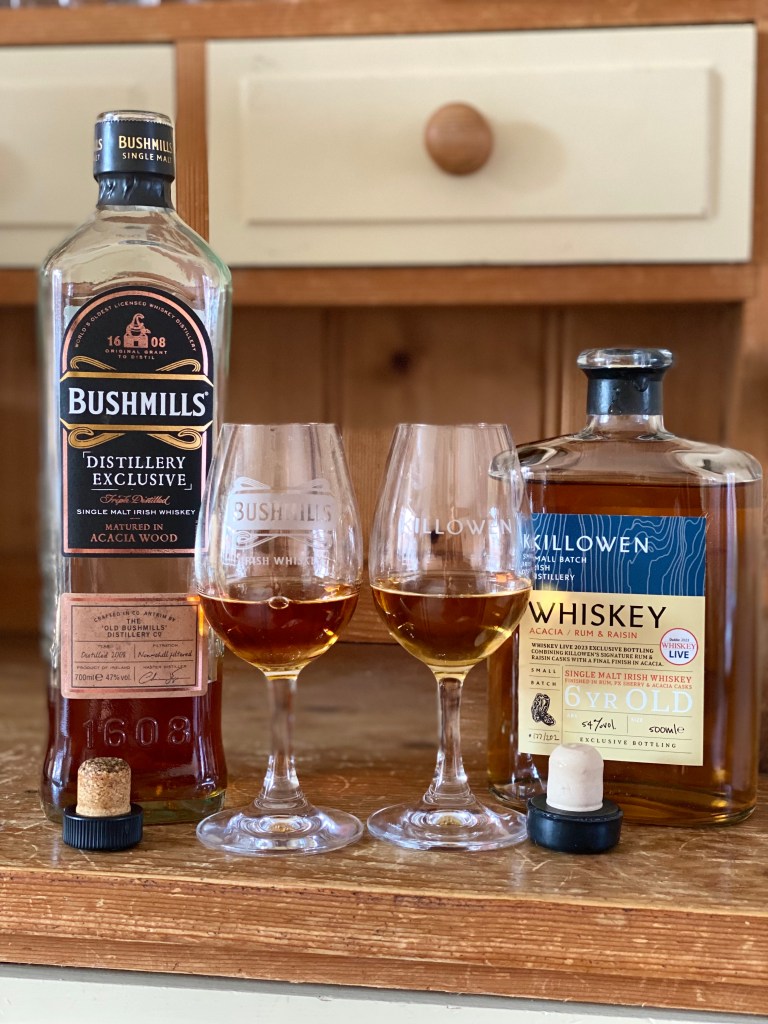
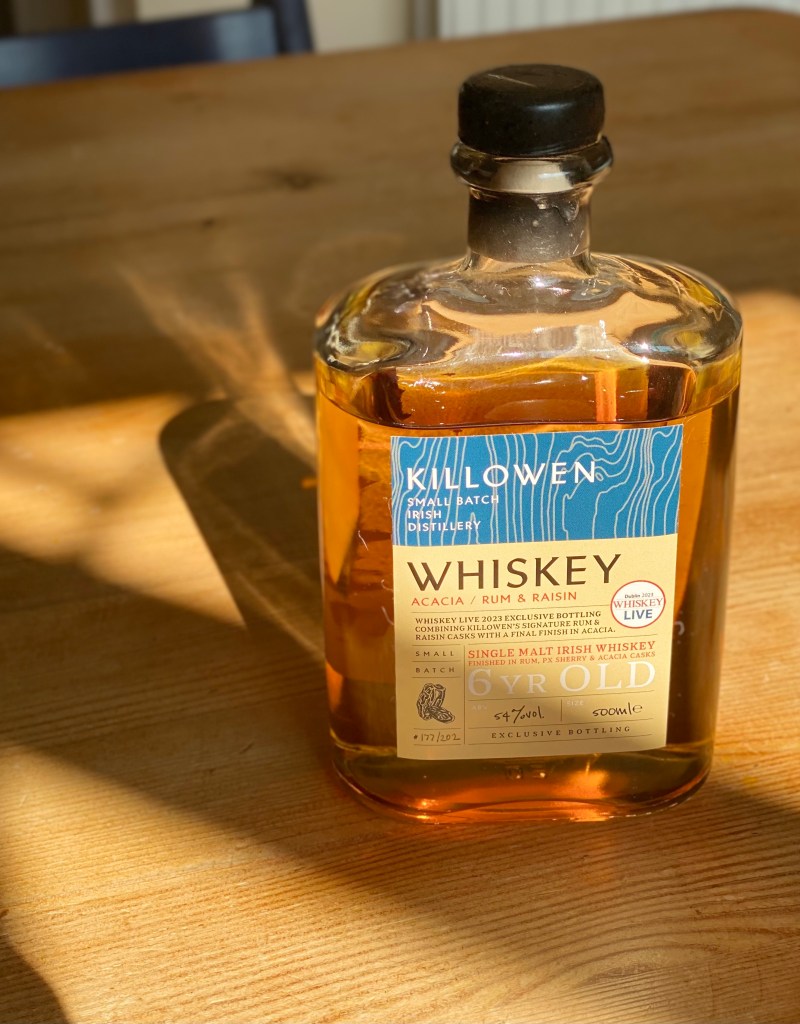
Furthermore, the use of Acacia wood holds appeal due to its distinctiveness. I have dedicated numerous hours to writing reviews that emphasise distillers’ freedom to be innovative and creative, with one avenue for exploration being the use of different types of wood. Two notable distilleries that have embraced wood experimentation are Killowen and Bushmills. Killowen recently unveiled an exclusive Whiskey Live offering, featuring their renowned 6-year-old rum and raisin expression. This 100% single malt Irish whiskey underwent a maturation process being divided and finished in Killowen’s dark rum casks and PX sherry butts. Subsequently, the spirit was combined and further aged in an Acacia cask for an additional 11 months, marking a deviation from their own conventions.
Traditionally known for their more conservative approach, Bushmills has also ventured into diverse finishing techniques. Their distillery exclusive release in 2018 showcased an ambitious endeavour and was possibly the first to use Acacia wood. After initial maturation in charred bourbon barrels and toasted sherry casks, the whiskey underwent the aging process in Acacia wood for over a year. While it carries no age statement, the 2008 title suggests a 10-year-old age profile from its release date.
Fascinatingly, it appears that Bushmills might have pioneered the adoption of Acacia wood in whiskey maturation, with Killowen being the latest distillery to follow suit. This presents an intriguing opportunity to examine the evolution of Acacia wood usage in whiskey production over time. Funnily enough, this is not Killowen’s first foray with Acacia wood: as part of their bonded experimental series, they finished whiskey in a Basque Txakolina cask along with some virgin Acacia heads.
Killowen 6-Year-Old Rum and Raisin finished in Acacia wood
ABV: 54%
Cost: £45 (sold out, but likely to be available on all of the popular auction sites soon…)
Nose: The nose is initially quite heavy on wood and very aromatic, with a pronounced herbal character. There are also abundant notes of aniseed and peppermint. Furthermore, the nose exhibits plenty of stoned fruit, such as unripened plums, and the sharpness of grapefruit. As the aroma develops, the scents of Jamaica cake and dedicated coconut emerge.
Palate: On the palate, there is a reduced herbal quality and a more prominent spiciness. Cinnamon and black pepper flavours dominate. The Caribbean influence remains evident, with hints of spiced coconut and molasses. The unmistakable taste of Christmas cake envelops the entire mouth.
Finish: The finish is marked by an incredible warmth. The flavours mellow ever so slightly, transitioning into spicy vanilla with a lingering, subtle hint of aniseed.
Score: 7.5/10
Bushmills’ Distillery Exclusive: Acacia Wood
ABV: 47%
Cost: £74 (only available in the distillery, but due to it being a 12,000-bottle release, there is likely to be much less now).
Nose: The nose is more refined compared to Killowen and exhibits a subtle character. The initial impression reveals a prominent spice note, accompanied by lingering aniseed. However, there is a significant increase in sweetness, with the presence of spiced vanilla custard and raspberry sorbet. The overall experience is refreshing, clean, and gives the impression of imminent intensity.
Palate: The palate delivers an abundance of burnt caramel flavours. There is an initial burst reminiscent of a Caramac bar, followed by the indulgence of crème brûlée. The taste also evokes charcoal embers soaked in whiskey, with a touch of butterscotch.
Finish: The finish is somewhat subdued but undeniably delightful. It mellows with hints of spiced vanilla and caramel sauce, accompanied by a touch of clove on the side.
Score: 7/10
Conclusion
It’s clear that the pronounced depth and profile of flavour observed in both of these whiskies can indeed be attributed to the influence of Acacia wood. The unique characteristics of Acacia wood, including its distinct cellular structure and the increased interaction facilitated by its large and evenly distributed pores, has contributed to the remarkable flavour development in the whiskies. This finish has showcased a brave and innovative approach by both distilleries. By incorporating this lesser-utilised wood type, they have ventured beyond traditional practices and embraced a new avenue for flavour exploration.
The Killowen whiskey, in my opinion, surpasses the Bushmills by a narrow margin. It not only offers a greater depth of flavour but also delivers a delightful complexity. Whilst it may lack some of the refinement found in Bushmills, there are instances when a whiskey benefits from a touch of rawness, this is one of those instances. The distinctive essence of Jamaica cake resonated with me, elevating this to something truly brilliant.
Before the Causeway Collection, Bushmills hadn’t really ventured into producing whiskey over 46% ABV. The reception and appreciation of this particular whiskey must have played a pivotal role in inspiring the birth of the Causeway Collection. It’s clear that the positive response from whiskey enthusiasts encouraged Bushmills to explore new horizons and craft a range of exceptional expressions within the Causeway Collection.
Acacia wood undoubtedly holds significant importance and offers great utility when it comes to whiskey maturation. Its unique characteristics impart distinct flavours and aromas to the spirit. As you continue your whiskey-buying journey supported by The Water of Life, seeking out expressions that have been matured or finished in Acacia wood is definitely a wise choice to explore the captivating nuances it brings to the world of whiskey.
 The Water Of Life