Port has always held a revered status in the world of whiskey, and its value continues to soar. However, one undeniable truth remains: harnessing its potential is no small feat. Given the inherently intricate nature of this rich spirit, mastering the art of incorporating port demands precision. Within whiskey making, port boasts the capacity to impart an extraordinary spectrum of flavours, complexity, depth and a truly astonishing palate. Yet, the stakes are high, and missteps can lead to a spirit that falls short, missing out on the full flourish of this exceptional finish.
In the world of Port wine, there are two styles: Ruby and Tawny, both hailing from Portugal’s Douro River valley and produced by the same winemakers using approved grape varieties. Tawny Port, in particular, distinguishes itself with a prolonged ageing process in smaller barrels, resulting in a mahogany hue and a symphony of flavours. There’s typically a range of flavours such as caramel, chocolate, dried fruits, and toasted nuts making it the ideal finish for whiskey.

Last year, Jonathon casted a critical eye over the Redbreast Tawny Port cask finish, a highly anticipated release. To his disappointment, this whiskey fell short of expectations (of which I fully agree), particularly when compared to the stellar PX and Lustau releases within the Iberian series. This instance was a glaring example of unmet expectations regarding the flavour profile for a Tawny Port finished whiskey. While Jonathon did encounter some savoury notes, the presence of what he described as “watered-down Ribena” and a noticeable “dryness” hinted at the possibility of inadequate maturation within the Tawny Port cask.
What prompts this intriguing phenomenon? It can be attributed to a multitude of factors. The lingering remnants of port’s distinctive flavours and characteristics can assert their dominance, occasionally veiling the more delicate nuances of whiskey. Additionally, certain compounds and tannins in the wood may have already been extracted, potentially diminishing the wood’s capacity to engage with the whiskey. Furthermore, Tawny port casks, notably smaller than their traditional whiskey barrel counterparts, expedite the ageing process by offering an enhanced surface area-to-volume ratio. This accelerated maturation occasionally results in an uneven extraction of flavours, with some qualities assuming prominence while others remain in a nascent state of development. It’s worth noting that the type of whiskey undergoing ageing also plays a pivotal role. Some whiskey varieties exhibit a greater susceptibility to the influence of Tawny port casks than others. Factors such as the whiskey’s inherent flavour profile and its age can significantly impact the nature of its interaction with the cask.
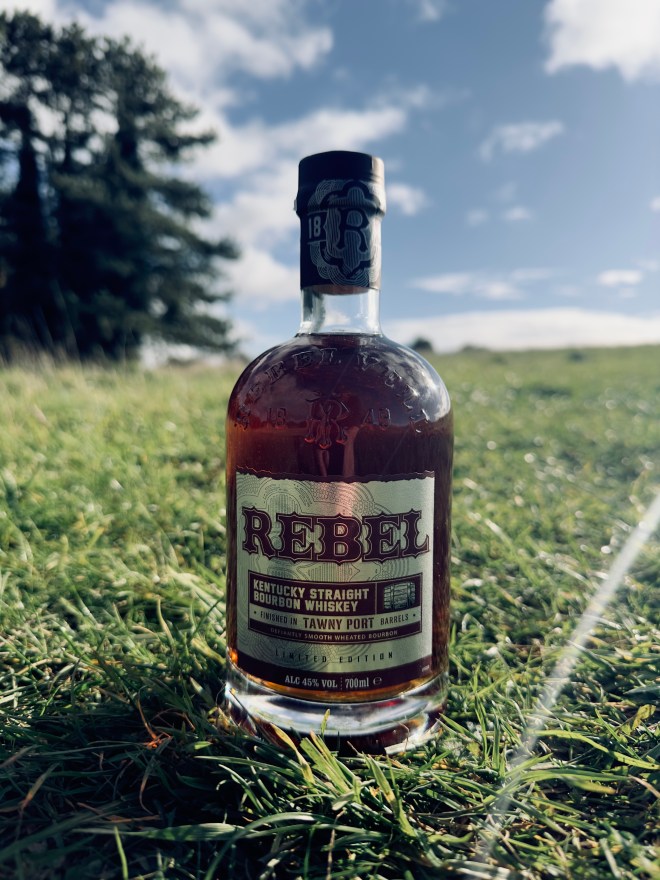
I’ve got two distinctly different Tawny port-finished spirits to review. Following a visit to my local, ‘The Little Whiskey Shop’, and receiving some insightful recommendations from @whiskeygraeme, I opted for the Rebel Tawny Port, Kentucky Straight Bourbon. With its creamy corn notes and spicy rye character, I anticipate it will deliver impactful flavours courtesy of its port finishing. As for a fair comparison, it will be pitted against a 10-year-old Tyrconnell, a gem I was fortunate to sample thanks to @causewaycoast. This Irish Single Malt whiskey underwent initial ageing in ex-bourbon barrels before a finishing touch of 6-8 months in Port wine casks.
Rebel Tawny Port
Price: £43.49 on Master of Malt
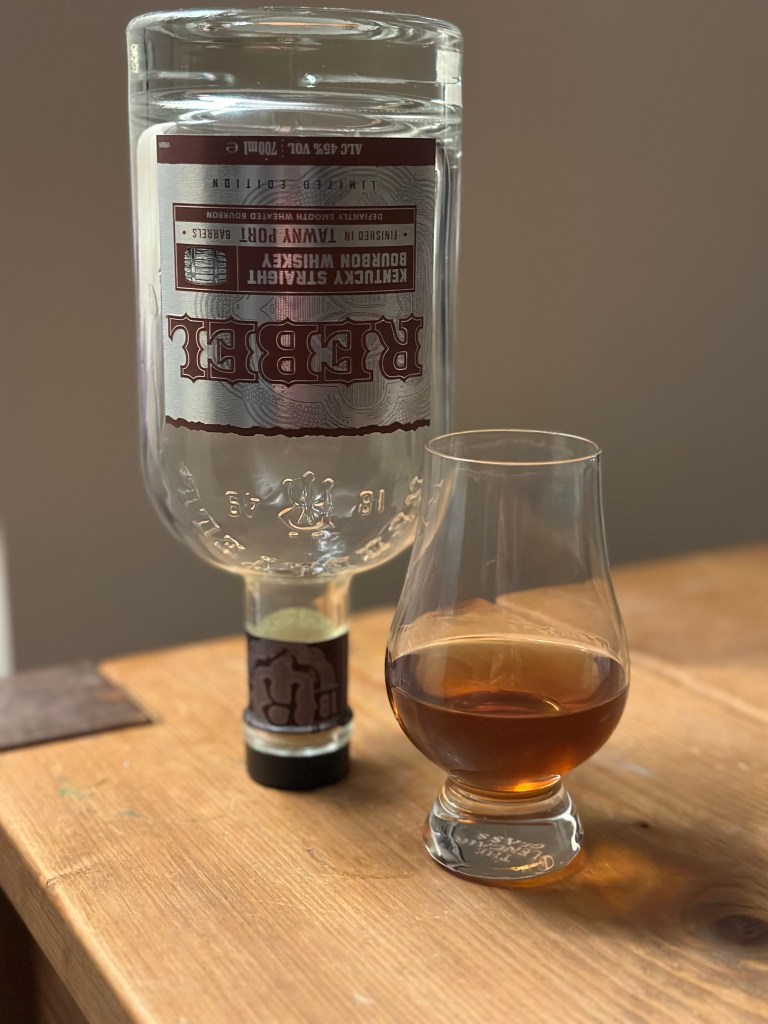
ABV: 45%
Nose: red grapes, boozy strawberries and syrupy prunes. There’s a beautiful sweet and fruity freshness to this, with redcurrants and jam quite prevalent. Boiled sweets and giant strawberries, almost sweet gelatinous goodness.
Palate: flat cherry coke, a little dry, almost salty. More of the strawberry jam. The sweetness is a little more subdued this time, and it’s more vanilla and light floral honey.
Finish: a little heat, not much. Some spearmint and a little finely ground pepper
Score: 7/10
Tyrconnell 10-year-old Single Malt Irish Whiskey
Price: £65 on IrishMalts
ABV: 46%
Nose: the nose of this whiskey is subtle yet complex, with lots of different layers. The initial impression reveals hints of luscious, stoned fruits, such as dark cherries and ripe plums, intertwined with notes of red liquorice and a touch of fruit cake.
Palate: initially it’s rich and spicy, with a blend of nutmeg, ginger, and a subtle touch of cinnamon. The flavours of fizzy cherry coke and cherry tangfastics add a playful and joyful dimension to the palate, while notes of honey provide a touch of sweetness. The highlight is the luxurious and velvety milk chocolate notes, which shine through and give it a smooth and delectable finish.
Finish: decadent chocolate, with a subtle hint of spice and clove. The medium to long finish is incredibly satisfying, leaving you with a sense of warmth and comfort.
Score: 6.5/10
Conclusion
I’ve tried a few whiskies finished in port casks, but I must say, these two stand out as some of the finest. Earlier, I mentioned the potential flavour profiles that can emerge when the barrel is treated with respect, and these whiskies truly epitomize the excellence of port maturation.
Let’s start with the Rebel. It embodies everything you’d expect from a top-notch bourbon, yet it also skilfully integrates the rich port notes. Surprisingly, the creamy and caramel-like qualities typically associated with bourbon harmonize beautifully with the port influence.
Moving on to the Tyrconnell, it was a bit of a gamble that paid off generously, graciously gifted by my friend @causewaycoast. This Irish whiskey offers a splendid demonstration of port maturation within the context of an Irish spirit. While it retains the hallmark spiciness and elegance of Irish whiskey, it also boasts the lusciousness of stoned fruits from the port cask, making it an effortlessly enjoyable dram.
It’s worth noting that some may argue that port-finished whiskies often command higher prices due to factors such as barrel expenses, size, and transportation, leading retailers to mark them up accordingly to cover their costs. However, these two whiskies defy that trend. They are exceptionally reasonably priced, offering easy-drinking experiences while still showcasing some of the finest port finishing in the market.
 The Water Of Life