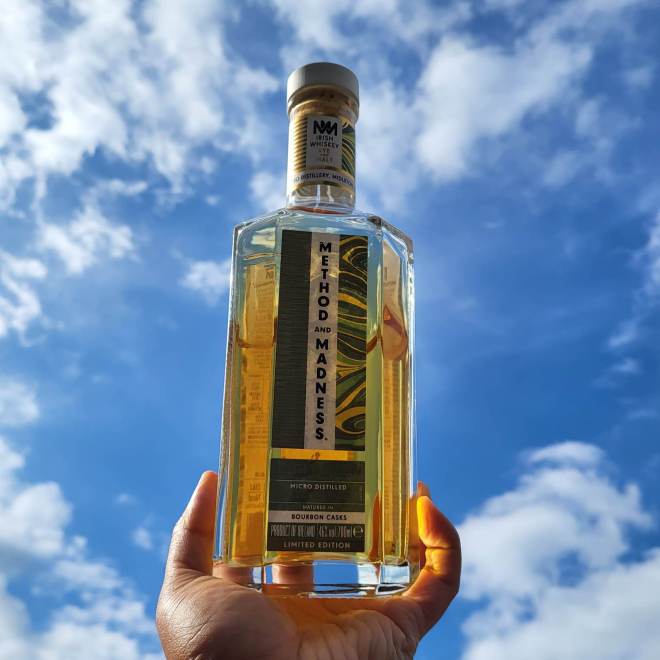
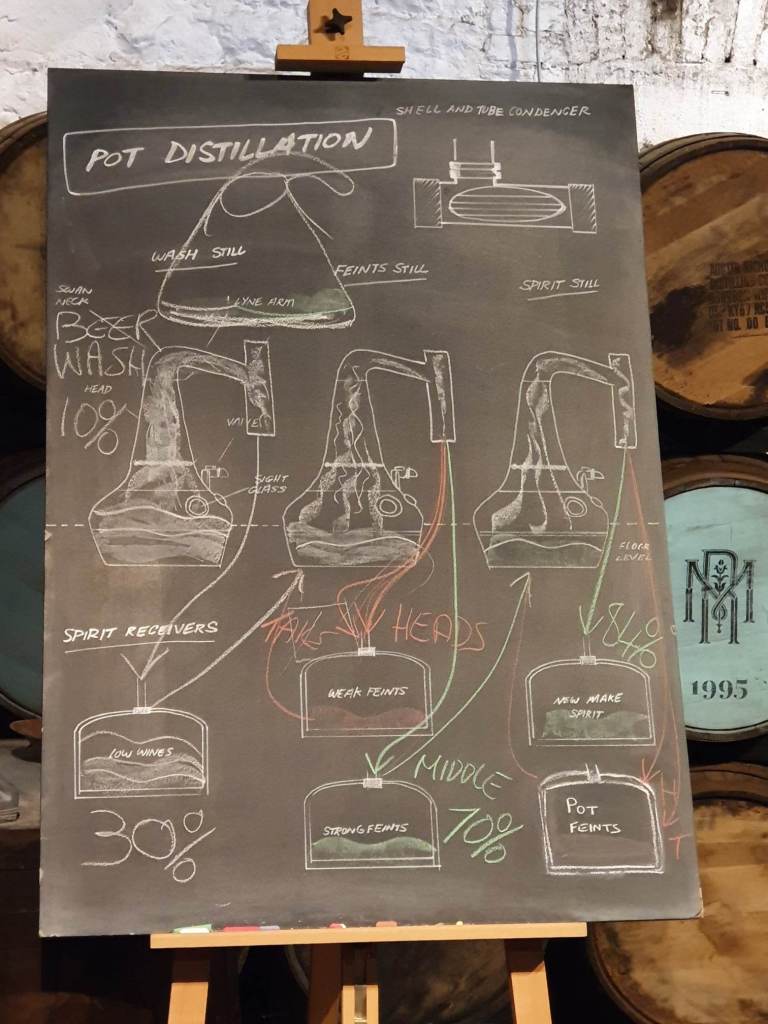
Within the complex of the Midleton Distillery in Cork lies a micro-distillery that is at the heart of innovation, education, and experimentation. Built in 2015 and commissioned in 2016, it is a playground for apprentice distillers and master distillers, where manual operation is key and reliance on high-tech alternatives such as SCADA (Supervisory Control and Data Acquisition) systems and automation is frowned upon. This micro-distillery is responsible for the Method & Madness range, which is a brand positioned as the dedicated experimentation and innovation brand of the Irish Distillers’ portfolio. The term “micro” might be a bit misleading, considering that their wash still has a capacity of 2,500L, and their intermediate and spirit stills have capacities of 1,500L. In comparison, Killowen, a favorite of The Water of Life (WoL), only has two stills currently with capacities of 1,000L and 800L. However, “micro” is more accurate when compared to Midleton’s main distillery, which houses their gigantic 75,000L stills.
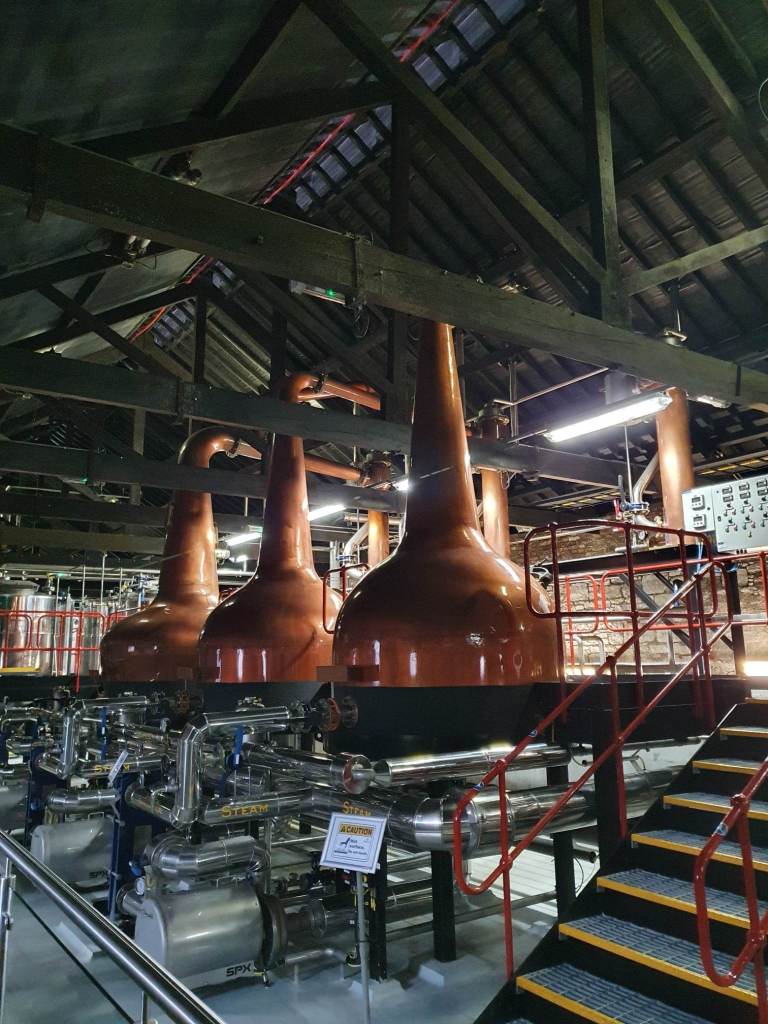
Initially, Method & Madness focused on innovation through maturation, as evident from their releases in previous years up until recently. They have explored a wide range of wood types to finish their whiskeys, including French oak, cherrywood, mulberry, acacia, Japanese cedarwood, Japanese mizunara, and many more, leaving no stone unturned in their quest of experimentation. Furthermore, they have ventured into different age statements, ranging from non-age statement releases to their 28–33-year-old single casks, which are priced at over a thousand Euros. The latest addition to their collection is the 33-year-old whiskey finished in Japanese mizunara, which retails for €3,000 and has been reviewed by Dave here in WoL previously.
Aside from maturation, the team at the micro-distillery also focuses on mashbills and distillation as areas for innovation. The release of Method and Madness Rye and Malt in September 2021 showcased their exploration in both of these areas, introducing a unique product that was not available in the market at that time (Shortcross followed suit the following year). This release was particularly special because it marked the micro-distillery’s first use of their own distillate. The whiskey was crafted from a mashbill consisting of 60% rye and 40% malt, which underwent a double distillation process. It was then matured in ex-bourbon casks and bottled at 46% ABV.
Unlike other Method & Madness releases, which often involved maturation or finishing in unconventional woods, this expression took a different approach. Furthermore, the unexpected 60/40 rye-heavy mashbill added to the surprise factor. The press releases and interviews surrounding the release emphasised that this whiskey draws inspiration from historical records, specifically John Jameson III’s ledger from 1857, which documented the use of various grains in distillation at Bow Street. Personally, I was immediately intrigued by this concept and purchased a bottle upon its release, although I only recently had the opportunity to open it.
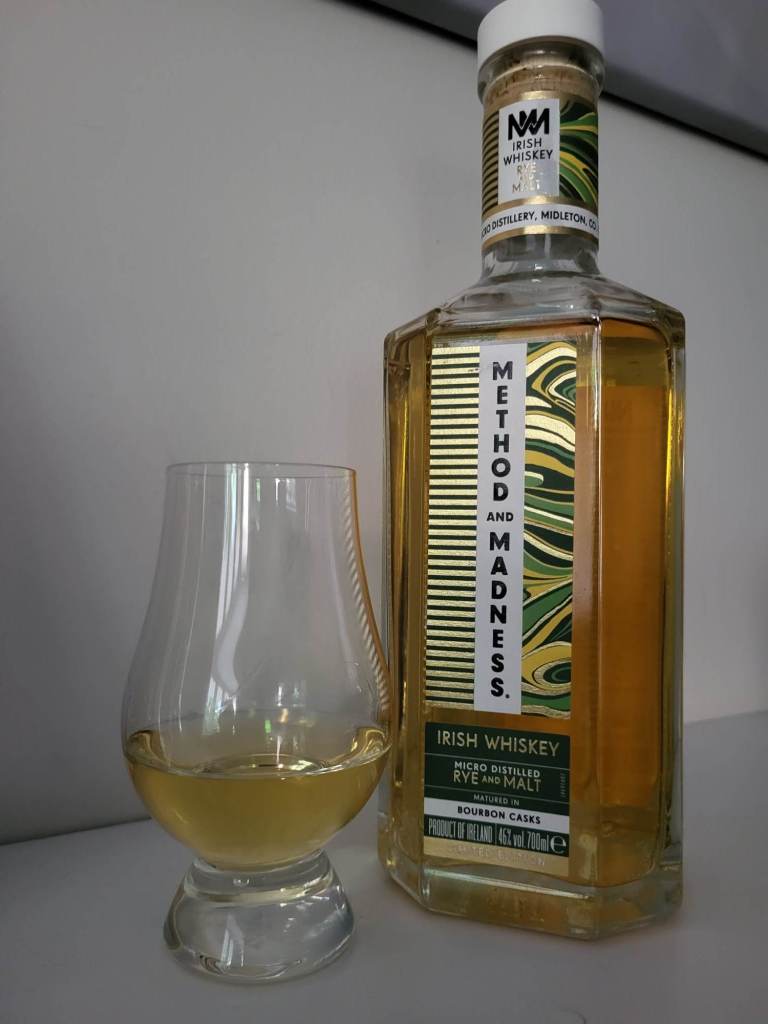
Nose: notes of lemongrass and jasmine tea, accompanied by a subtle hint of cereal malt. However, the alcohol burn on the nose is persistent and reminiscent of what you would typically expect from a cask strength whiskey, which can be a bit overpowering. As a result, I double-checked the ABV to confirm that it is indeed 46%.
Palate: there is a subtle, light wasabi burn present, along with a hint of Vick’s vapor rub. The mouthfeel is notably light, and upon further exploration with some chewing, the cereal notes become more pronounced, accompanied by a touch of rye spice. However, despite the intention for this whiskey to showcase the distillate’s character, it does not come through prominently due to the overpowering burn or spice sensation. It is challenging to figure out whether the spiciness originates from the alcohol itself or the rye content.
Finish: The rye character becomes more pronounced on the finish, although it eventually dissipates. It leaves behind a lingering sweet-bitter taste reminiscent of candied Brussels sprouts.
Score: 3/10
Conclusion
This whiskey has received the lowest score I’ve given so far in WoL, indicating that it is drinkable but not brilliant. (check the scoring guide here). When evaluating it, I took several factors into consideration, primarily the quality of the liquid itself, which, in my opinion, fell short of their intended goals. I find that distillate-forward whiskeys tend to shine better at cask strength, particularly when they are young and aged solely in ex-bourbon casks.
Furthermore, considering the price of €95 per bottle, I experienced buyer’s remorse upon tasting it because I have encountered better comparable whiskeys at lower price points. For instance, I would certainly rate Powers Rye and Shortcross Rye & Malt higher in comparison. Lastly, when compared to other Method & Madness releases, it simply did not live up to the level of innovation, uniqueness, and deliciousness that some of their other gins and whiskeys have achieved.
Not every experiment yields the desired results, and for those of us who purchased a bottle and shared a similar experience, we can attribute it to the learning process. As for the more recent Oats and Malt release, I have chosen to abstain thus far, but I remain open to trying it when the opportunity arises. It’s worth mentioning that earlier this year, Irish Distillers Limited (IDL) introduced a limited release of 5,000 bottles of the Rye & Malt specifically for the US market. This variation has undergone triple-distillation, which differs from the version I reviewed, released in Ireland in 2021 and double-distilled. I am hopeful that the triple-distilled edition will find a greater appeal among consumers.
 The Water Of Life